LDS Design System
Overview
Foundations, tokens, and handoff for a consistent product UI.
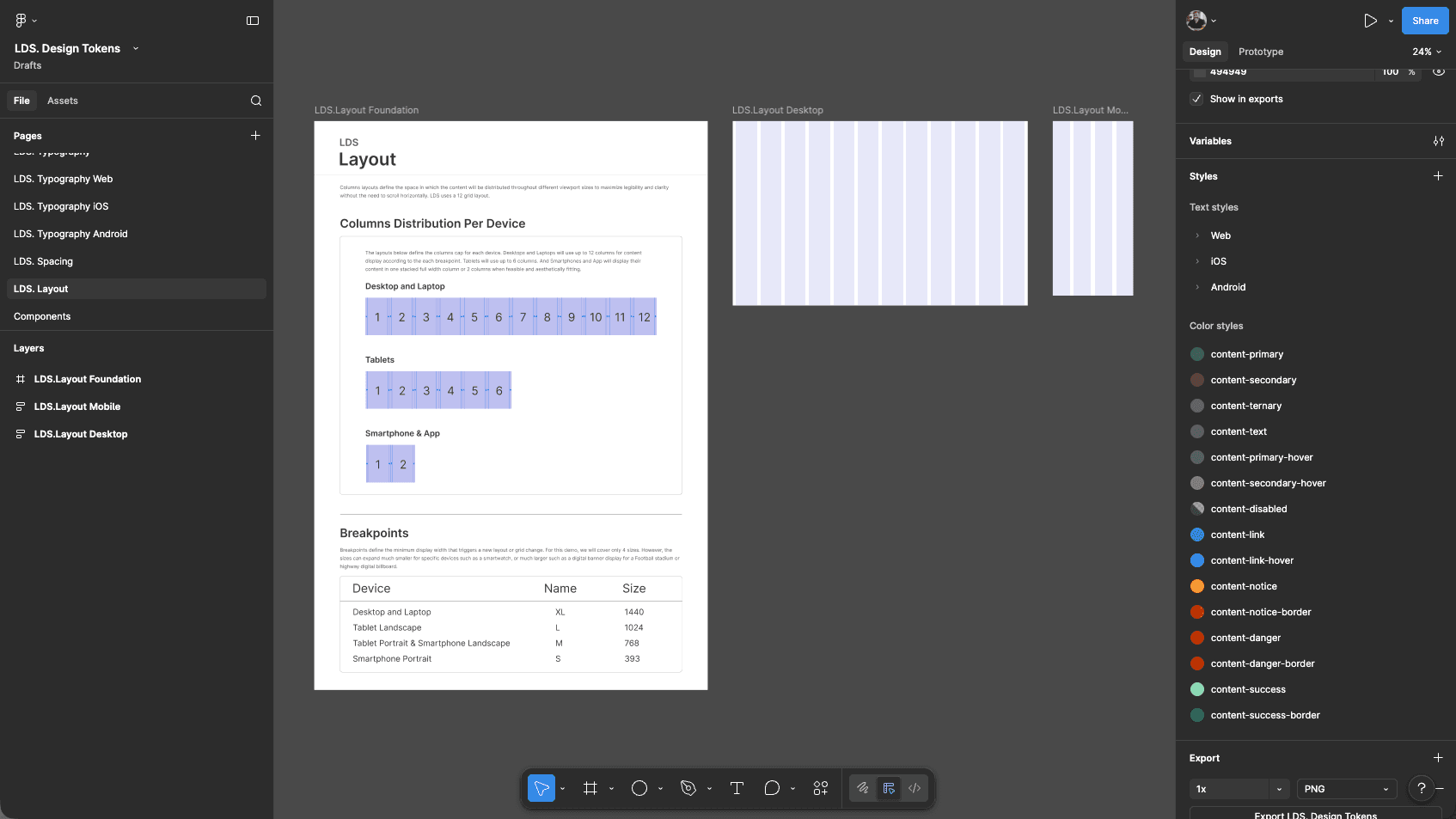
This case study documents the LDS design token work: how layout, color, and typography are defined in Figma, organized for reuse, and translated into outputs engineers can adopt without guesswork.
The system is built to align UX decisions with implementation—fewer one-off styles, clearer hierarchy, and a path to scale new surfaces and components without breaking consistency.
Goals
- Establish a single source of truth for layout, color, and typography across products.
- Reduce design–dev drift by pairing Figma tokens with implementation-ready output.
- Improve accessibility and consistency through a documented semantic color scale.
Foundation walkthrough
Artifacts from the token set—structure, palette, type, and handoff.
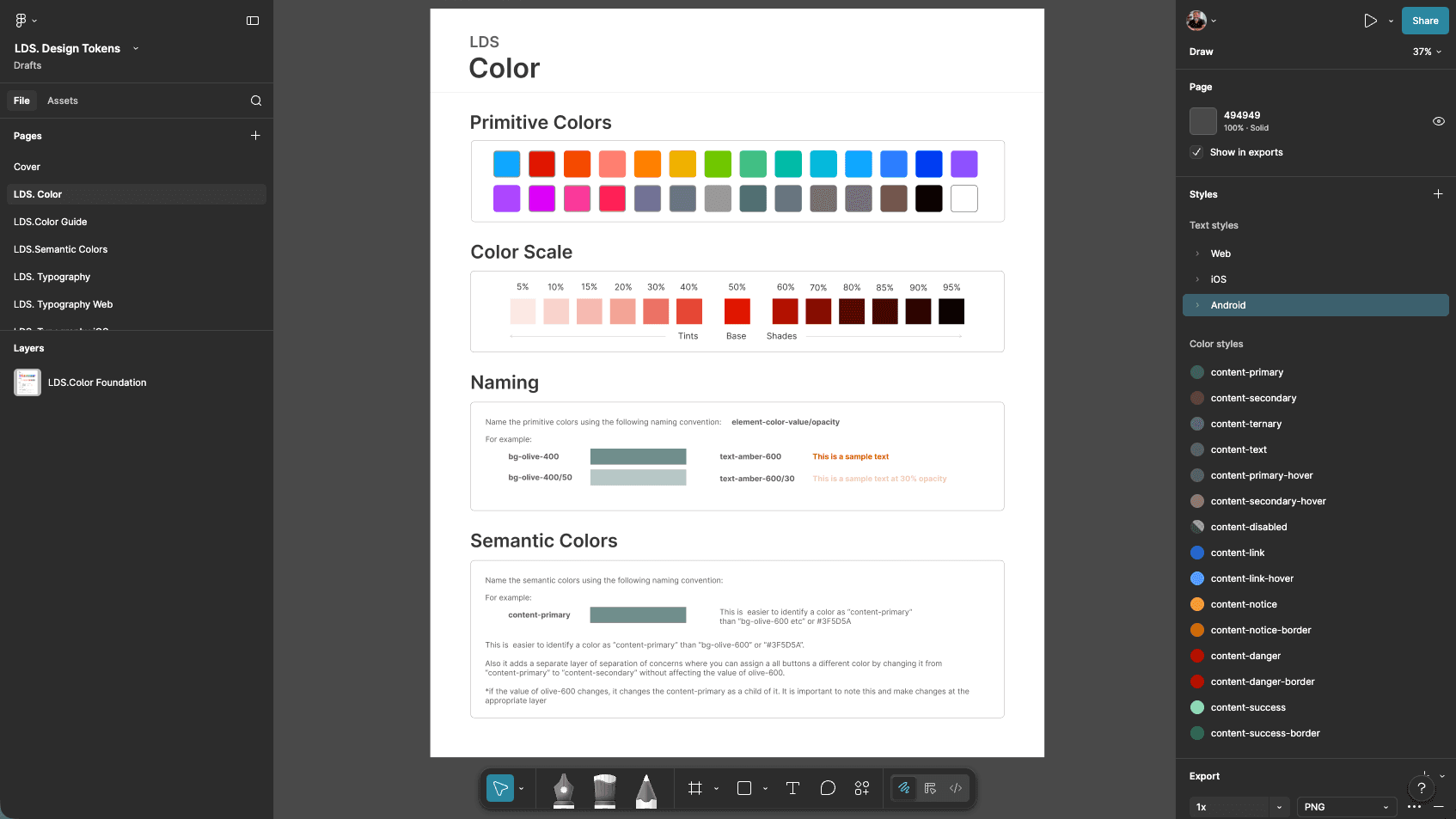
Color scale
The palette is organized as a semantic scale for surfaces, text, borders, and interactive states.
Tokenized colors keep contrast predictable and make theme or brand evolution easier to manage.
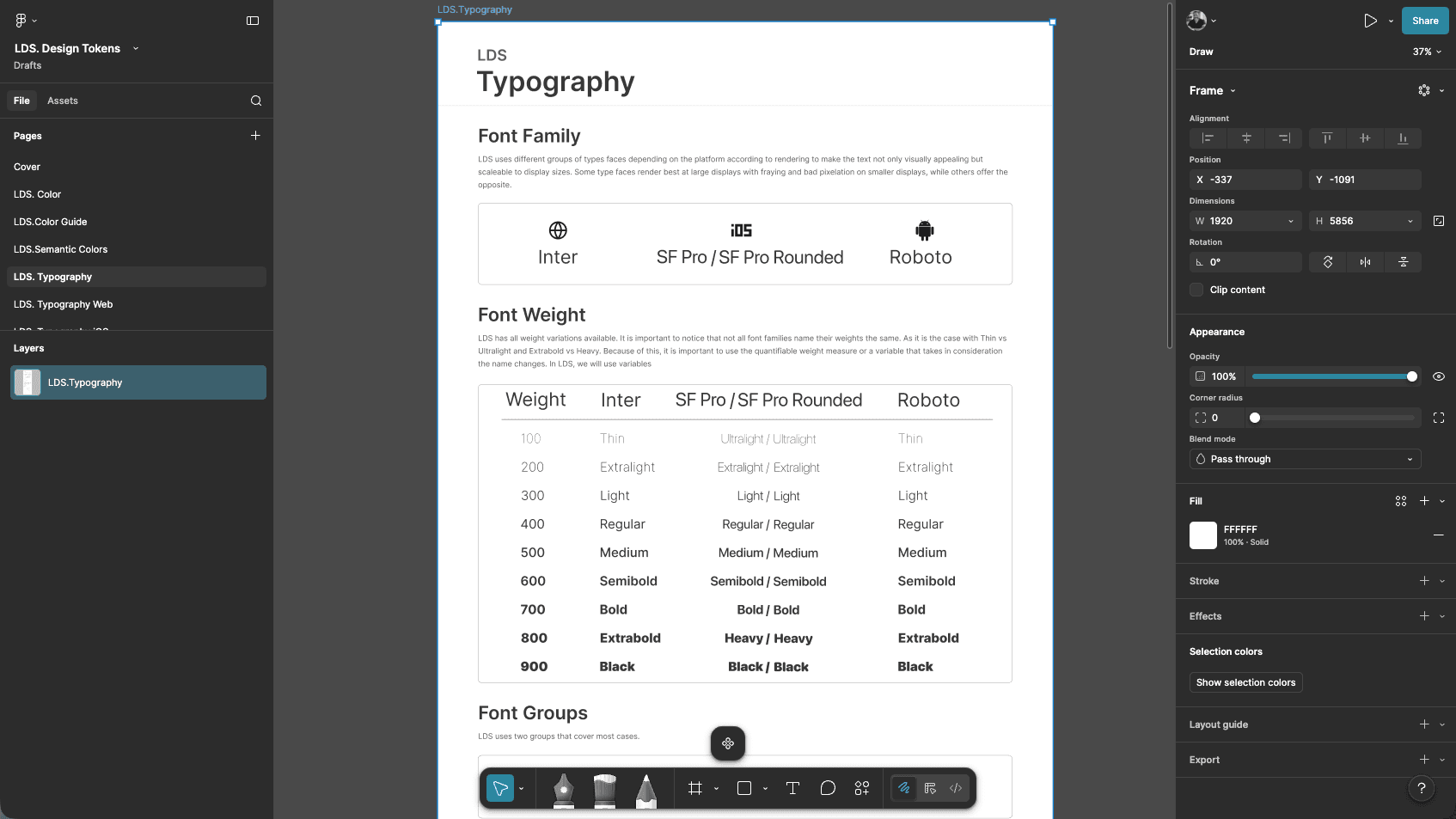
Typography system
Type roles are mapped to sizes, weights, and line heights for headings, body, and UI labels.
A clear hierarchy improves scanability and keeps long-form content comfortable to read.
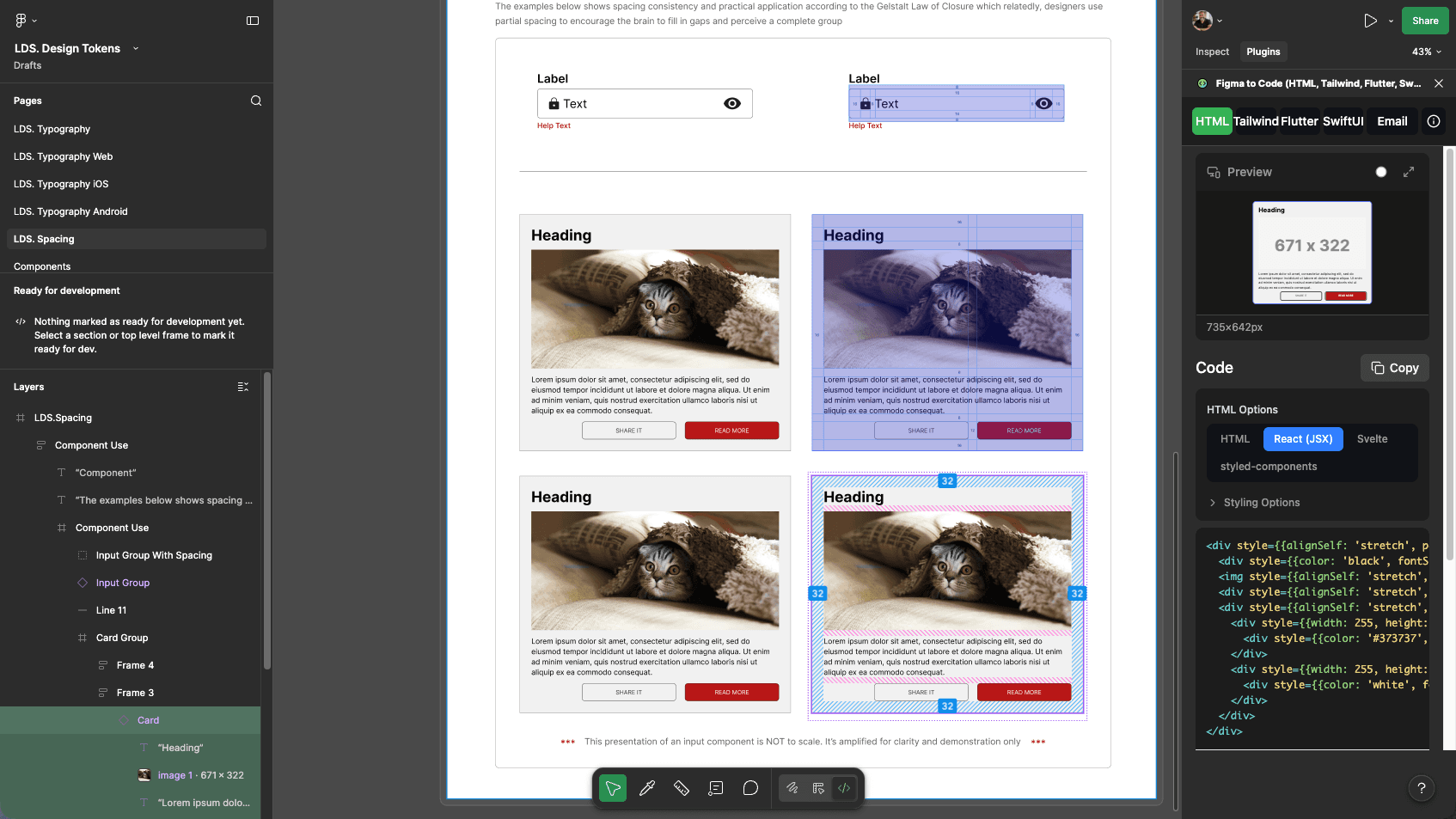
Developer output
Documentation bridges design intent with what ships in code—naming, values, and usage in one place.
That alignment reduces ambiguity in implementation and keeps the UI consistent as the product grows.
Outcomes
- Reusable foundations that speed up UI work and keep interfaces visually aligned.
- Clearer handoff: designers and engineers reference the same token names and scales.
- A scalable base for adding components and patterns without one-off exceptions.